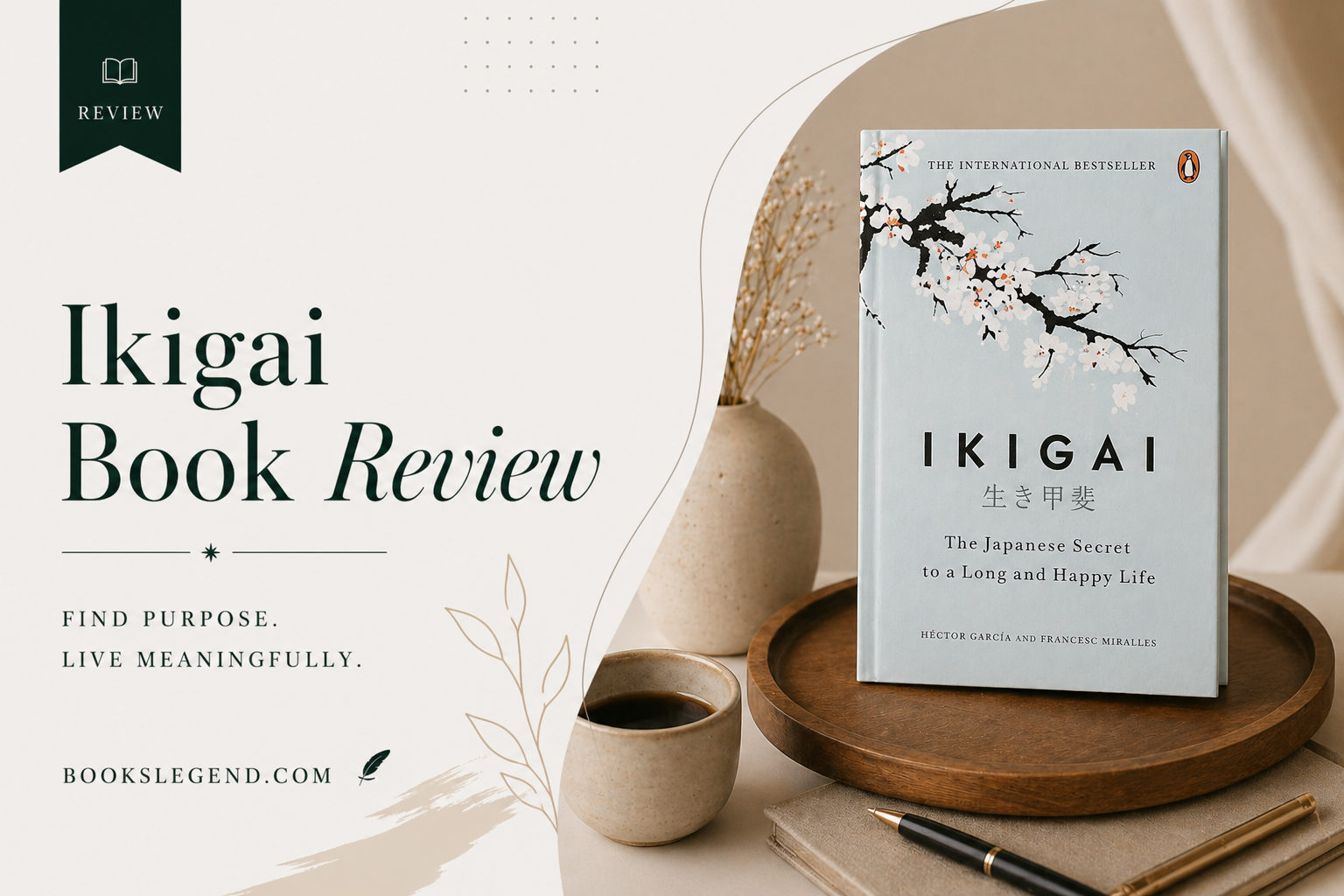
Ikigai Book Review: Is This the Secret to a Longer, Happier Life?
The Ikigai book review you’ve been looking for starts with one honest question: can a short Japanese philosophy book actually change how you live? After reading it, the answer is yes, and no, and it depends entirely on what you bring to it.
This book by Héctor García and Francesc Miralles came out in 2016 and became one of the best-selling self-help books in the world. Millions of people have read it. But does it live up to the hype? Let’s get into it.
What Is Ikigai?
Before getting into the review, it helps to understand the concept.
Ikigai (pronounced ee-kee-guy) is a Japanese word that roughly means “reason for being.” It’s your reason to get out of bed in the morning. It sits at the intersection of four things: what you love, what you’re good at, what the world needs, and what you can be paid for.

This idea isn’t new. Japanese culture has used it for centuries. But the authors packaged it for Western readers in a way that made it stick. The Venn diagram showing the four circles became famous on its own. You’ve probably seen it shared across social media without even realizing where it came from.
The book expands on this idea and connects it to longevity research, particularly around the island of Okinawa, Japan, which has one of the highest concentrations of centenarians (people who live past 100) in the world.
Who Wrote This Book?
Héctor García is a Spanish author who has lived in Japan for many years. He also wrote A Geek in Japan, a popular guide to Japanese culture. Francesc Miralles is a Spanish novelist and self-help author with a long list of books on happiness and philosophy.
The two co-wrote Ikigai after García spent time in Okinawa interviewing elderly residents about what they believed kept them alive and thriving. The book blends their research with psychology, neuroscience, and Japanese cultural wisdom.
Neither author is a scientist, and that matters for how you read the book. It reads more like a thoughtful essay than an academic study. That’s not a flaw, but it’s good to know going in.
What the Book Is Actually About
The book covers more than the ikigai diagram. Here’s what you actually get:
The Okinawa Secrets
A large section of the book focuses on the residents of Okinawa and what they credit for their long lives. Their answers are simple: stay active, eat until you’re 80% full (a practice called hara hachi bu), keep strong social bonds, and have a sense of purpose. Nothing earth-shattering, but the way the authors frame these habits through real conversations with real people makes it feel grounded.
Flow and Staying in the Zone
The authors spend a good amount of time on Mihaly Csikszentmihalyi’s concept of flow, the mental state where you’re so absorbed in what you’re doing that time disappears. They connect this to ikigai directly, arguing that when you’re doing your “reason for being,” you naturally enter flow more often.
This was one of the stronger parts of the book for me. The connection between purpose and flow is real, and seeing it laid out simply was useful.
Logotherapy and Viktor Frankl
The book also touches on Viktor Frankl’s logotherapy, a form of psychotherapy built on the idea that the search for meaning is the core human motivation. Frankl survived Nazi concentration camps and wrote Man’s Search for Meaning from that experience. The authors use his work to argue that having purpose keeps people alive, literally and figuratively.
This section felt a bit rushed. Frankl’s ideas deserve more space, and readers who haven’t read Man’s Search for Meaning might want to after this.
Wabi-Sabi and Acceptance
Toward the end, the book looks at other Japanese concepts like wabi-sabi (finding beauty in imperfection) and mono no aware (the bittersweet awareness that everything is temporary). These tie back to the idea of finding peace with who you are and where you are right now.
Ikigai Book Review: What Works
Here’s where the Ikigai book review gets specific.
It’s Genuinely Readable
The book is short, around 200 pages, and the chapters are tight. You can read it in a weekend. The writing is clear, the pacing is good, and it never buries you in theory. For a self-help book, that’s a bigger compliment than it sounds.
The Okinawa Stories Feel Real
Some self-help books fill pages with invented examples or vague anecdotes. The Okinawa interviews give this book a grounded quality. You’re hearing from real people in their 90s and 100s talking about what their lives feel like. That’s rare, and it works.

It Doesn’t Preach
A lot of books in this category tell you what you’re doing wrong. Ikigai mostly shows you what going right can look like. The tone is warm, not scolding. You close the book feeling encouraged, not guilty.
The Core Idea Is Genuinely Useful
Even if you’re skeptical of self-help, the central question, “why do you get out of bed in the morning?”, is worth sitting with. The book doesn’t promise to answer it for you, but it gives you a useful framework for thinking about it yourself.
What the Book Gets Wrong
No honest Ikigai book review skips the weaknesses.
The Diagram Is Misleading
The famous four-circle Venn diagram is not actually from traditional Japanese ikigai. Researchers have pointed out that the original Japanese concept is much simpler and more personal. The diagram is a Western invention that was mapped onto the word. The book doesn’t make this clear, which can leave readers chasing a slightly distorted version of the idea.
The Science Is Thin
The book cites research, but loosely. Some of the longevity claims about Okinawa are more complicated than the book lets on. Okinawa’s “Blue Zone” status has been questioned by researchers who point to data issues and the changing health of younger Okinawans today. The book doesn’t engage with any of that complexity.
It Stays Surface-Level
If you want a deep exploration of Japanese philosophy, this isn’t it. The book is an introduction, not a full treatment. Readers looking for real depth will want to go elsewhere after finishing it.
The Practical Exercises Are Weak
The book sometimes gestures toward exercises but rarely gives you anything concrete to do. You finish knowing the ideas but not always sure how to apply them. That gap is real.
Who Should Read Ikigai?
This book works best for a specific kind of reader.
You’ll get a lot out of it if you’re going through a transition, whether that’s a career change, a move, or just a period where life feels a bit empty. The book is good for opening up questions you might not have let yourself ask.
It also works well if you’re new to Japanese philosophy or positive psychology. For readers already familiar with concepts like flow, logotherapy, or mindfulness, some of it will feel like a refresher course.
If you’re a skeptic who needs rigorous evidence for everything, this one might frustrate you. Better to start with something like Viktor Frankl’s Man’s Search for Meaning and come back to this one later.
How It Compares to Similar Books
Ikigai lives in the same neighborhood as The Blue Zones by Dan Buettner, which covers longevity research across multiple regions of the world. Buettner’s book has more data but less warmth. Ikigai wins on tone and ease of reading.
It also shares DNA with Man’s Search for Meaning by Viktor Frankl, which the authors reference often. Frankl’s book is harder to read but much more powerful. If you have to choose, read Frankl first.
For philosophy of purpose in a Western context, you might also look at Bronnie Ware’s The Top Five Regrets of the Dying, which takes a similar “what makes life meaningful” angle but from a nurse’s experience with patients at the end of life.
Final Verdict
This Ikigai book review lands at a genuine 7 out of 10.
It’s an easy, pleasant read that asks useful questions. The Okinawa stories are memorable. The core idea is worth your time. But it doesn’t go deep enough to be transformative on its own, and it glosses over some of its own limitations.

Read it as a starting point, not a destination. Let it point you toward bigger questions, then go find the books that answer those questions properly.
If you want a book that makes you feel something and gets you thinking about what your life is actually for, Ikigai does that well. Just don’t expect it to hand you the answers.
Tags: