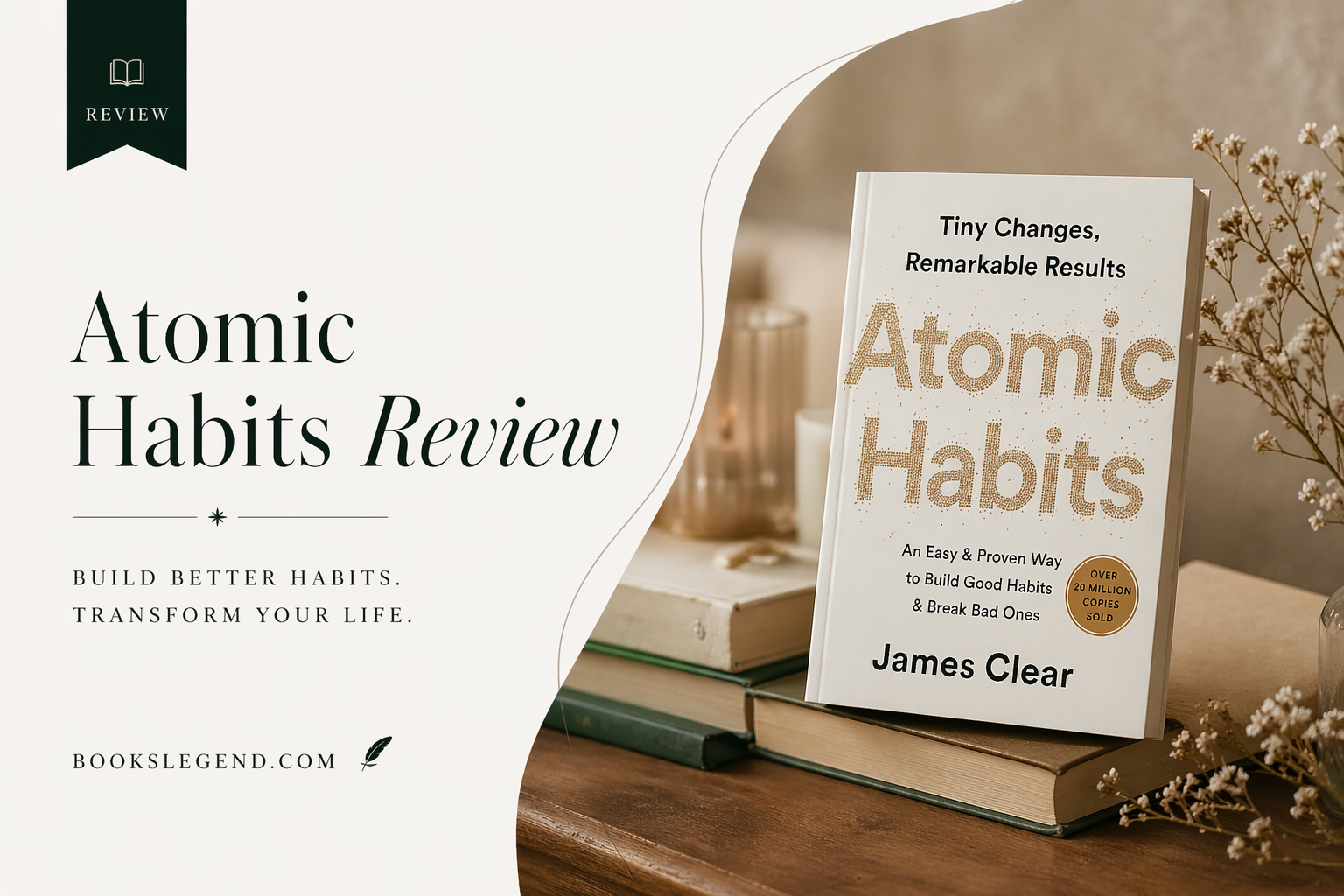
Atomic Habits Review: Does James Clear’s Book Actually Work?
If you’ve heard the name Atomic Habits floating around, you’re not imagining things. This book has been on bestseller lists for years. And people don’t just read it once. They come back to it. They highlight it. They buy copies for friends.
But is it worth the hype? Let’s get into it.
What Is Atomic Habits About?
The Atomic Habits review you’ll find almost everywhere says the same thing: it’s a book about building good habits and breaking bad ones. That’s true, but it sells the book a little short.
What James Clear is really doing here is giving you a system. Not just tips. A whole way of thinking about change and why most people fail at it.
The word “atomic” is doing a lot of work in the title. Clear uses it to mean two things: small (like atoms) and powerful (like atomic energy). The idea is that tiny habits, done consistently, add up to massive results over time.
So it’s not about motivation. It’s not about willpower. It’s about building systems that make the right behavior almost automatic.

Who Is James Clear?
James Clear is a writer and speaker who became well-known through his popular newsletter and website before the book came out. He writes about habits, decision-making, and continuous improvement. His work draws on psychology, neuroscience, and biology, but he explains everything in a way that’s easy to understand.
He’s not a scientist himself, but he’s good at reading research and translating it for regular people. That’s actually one of the book’s biggest strengths.
Atomic Habits was published in 2018 and has sold over 15 million copies worldwide. Those numbers aren’t an accident.
The Core Ideas in Plain English
Clear builds his whole framework around what he calls the Four Laws of Behavior Change. Each law covers one part of the habit loop: cue, craving, response, and reward.
Here’s how it works:
Make it obvious. You want to start a habit? Make the cue visible. Put your running shoes by the door. Set your book on your pillow. Your environment shapes your behavior more than you think.
Make it attractive. You’re more likely to do something if it feels good before you start. Clear talks about “temptation bundling,” which means pairing a habit you need to do with something you actually want to do.
Make it easy. This one surprised me the most. He argues that the most important thing is reducing friction. Don’t try to run 5 miles on day one. Start with a two-minute walk. The goal is to show up, not to perform.
Make it satisfying. Habits stick when they feel rewarding right away. Your brain likes immediate feedback. So give yourself some, even if it’s small.
To break bad habits, you just flip these rules. Make the cue invisible. Make it unattractive. Make it hard. Make it unsatisfying.
Simple? Yes. But that’s kind of the point.
What the Book Gets Really Right
Honestly, there’s a lot to like here.
Clear’s writing is clean and clear (no pun intended). He doesn’t waste your time with long introductions or padding. Every chapter feels purposeful.
The examples are really well chosen. He uses stories from athletes, musicians, doctors, and everyday people. It never feels like a lecture. It feels like someone showing you real things that happened to real people.
One concept that stuck with me is the idea of identity-based habits. Most people say “I want to read more.” Clear says the better goal is to think of yourself as “a reader.” You vote for your identity every time you act in line with it. That small shift in framing is genuinely powerful.

The two-minute rule is also worth highlighting. If you struggle to start new habits, this idea alone is worth the price of the book. You break any habit down to its two-minute version. Want to study? Just open the textbook. Want to work out? Just put on your gym clothes. Starting is the hardest part, so make the start ridiculously easy.
Where Atomic Habits Falls Short
No book is perfect, and this one isn’t either.
If you’ve already read books like The Power of Habit by Charles Duhigg or Thinking, Fast and Slow by Daniel Kahneman, some of the ideas here will feel familiar. Clear pulls from a lot of existing research and reframes it well, but he’s not breaking entirely new ground.
Some readers also find the book a bit repetitive in the middle section. He makes his core points early and then keeps returning to them with new examples. That repetition helps some readers absorb the material better, but if you’re already sold on the idea, it can slow things down.
There’s also a bigger critique worth mentioning. The book is very optimized for individual behavior change. It doesn’t really talk about structural barriers, like how hard it is to build healthy habits when you’re working two jobs or dealing with mental health issues. For some readers, the advice can feel a little too clean and tidy.
These are fair criticisms. But they don’t take away from how useful the book is for most people in most situations.
Who Should Read Atomic Habits?
This book works best for people who already know what they want to change but can’t seem to make it stick. If you’ve tried to build a habit, failed, and wondered why, this book gives you a framework for understanding what went wrong.
It’s also great for beginners. If you’ve never read anything about habits or behavior change, this is a fantastic starting point. Clear does a great job of making complex psychology feel approachable.
Students, professionals, athletes, writers, people trying to exercise more or scroll their phones less. The advice is broad enough to apply to almost anyone.
If you’re already deep into this genre and have read widely on the topic, you might find it covers familiar ground. But even then, Clear’s practical frameworks and clean writing make it worth reading.
How It Compares to Similar Books
There are a few books that often come up alongside an Atomic Habits review, so it’s worth saying a word about how they compare.
The Power of Habit by Charles Duhigg covers similar territory but goes deeper into the neuroscience. If you want more of the “why” behind habit formation, that’s a good companion read.
Tiny Habits by BJ Fogg focuses heavily on the idea of starting small, similar to Clear’s two-minute rule. Fogg’s approach puts more weight on emotion and celebration as habit drivers. Some people prefer his method.
Deep Work by Cal Newport isn’t specifically about habits, but it pairs well with Atomic Habits if you’re trying to build focused, productive routines.

Of the habit books out there, Atomic Habits is probably the most practical and the most readable. It’s the one I’d hand to someone who doesn’t usually read nonfiction.
Final Thoughts
After this full Atomic Habits review, here’s where I land: this is one of those books that earns its reputation.
It’s not magic. You won’t read it and wake up a different person. But if you actually use what Clear teaches, things can change. The ideas are simple enough to remember and practical enough to act on. That’s a rare combination.
If you haven’t read it yet, it’s worth your time. And if you’ve been putting it off, maybe that’s the first habit to change.
You can check out more about the book and its ideas directly on the Atomic Habits Goodreads page to see what other readers are saying.
Tags: