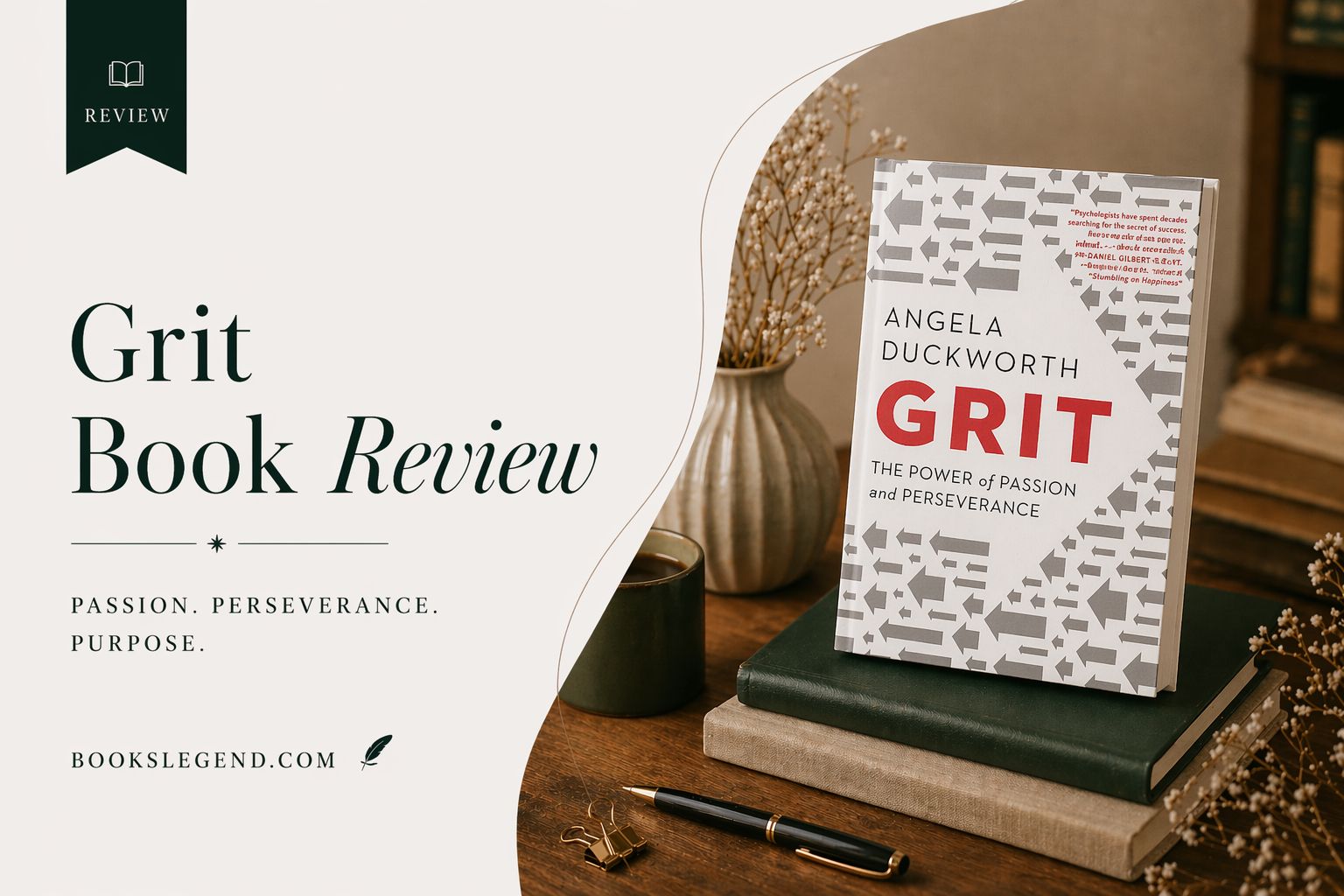
Grit Book Review: Is Angela Duckworth’s Bestseller Worth Reading?
If you’ve ever wondered why some people succeed and others don’t, this Grit book review is for you. Angela Duckworth’s Grit: The Power of Passion and Perseverance has sold millions of copies worldwide. But does it actually live up to the hype? Let’s find out.
What Is Grit About?
Grit was published in 2016 and became an instant hit. It’s a non-fiction book that argues talent isn’t what makes people successful. Instead, Duckworth says it comes down to two things: passion and perseverance. She calls this combination “grit.”
The book draws on years of Duckworth’s research as a psychologist at the University of Pennsylvania. She studied everyone from West Point cadets to National Spelling Bee contestants. Her conclusion? The grittiest people, not the most talented ones, tend to rise to the top.
That’s a bold claim. And to her credit, she backs it up with real data.

About the Author: Angela Duckworth
Angela Duckworth isn’t just an author. She’s a MacArthur Fellow, often called a “Genius Grant” recipient, and a professor of psychology. She left a demanding consulting job to become a middle school math teacher before eventually going back to school to study why some students thrived while others struggled.
That backstory matters. It gives her book a personal, lived-in quality that a lot of self-help books don’t have. She’s not just reporting on other people’s research. She’s spent her career obsessing over this question.
You can learn more about her work on the official Grit website.
Grit Book Review: The Core Ideas
The Grit Scale
One of the most talked-about parts of the book is the “Grit Scale,” a short quiz Duckworth developed. It’s meant to measure how much grit a person has. You rate yourself on statements like “I finish whatever I begin” or “My interests change from year to year.”
The idea is that grit can be measured and, importantly, grown. That’s a hopeful message. And it’s one of the reasons the book resonated so widely.
The Four Pillars of Grit
Duckworth breaks grit down into four key elements:
Interest. You have to genuinely care about what you’re working toward. Not fake interest. Real, deep curiosity about your field or goal.
Practice. She’s a big believer in deliberate practice. Not just going through the motions, but pushing yourself a little harder each time, focusing on your weaknesses, and seeking honest feedback.
Purpose. The grittiest people don’t just work for themselves. They feel their work connects to something bigger, whether that’s a community, a cause, or the people they care about.
Hope. Not blind optimism, but a belief that effort matters. Gritty people don’t give up when things get hard because they genuinely believe they can improve.
Nature vs. Nurture
One of the most interesting sections of the book tackles whether grit is something you’re born with or something you develop. Duckworth’s answer is clear: both. Genes play a role. But environment, culture, and parenting matter just as much.
She talks about “gritty cultures” and how families, schools, and organizations can build grit in the people around them. This is where the book gets genuinely useful for anyone in a leadership or teaching role.
What the Book Gets Right
It Challenges the “Born Talented” Myth
This is the book’s biggest strength. Most of us have been told at some point that someone is just naturally gifted. Duckworth pushes back hard on that idea. She shows, through study after study, that effort counts twice. Talent times effort equals skill. Skill times effort equals achievement.
That framing is simple and powerful. It makes you reconsider how you think about your own potential.

It’s Packed with Real Stories
The book doesn’t feel like a textbook. Duckworth uses stories throughout, from an Olympic swimmer’s training schedule to a pastry chef’s obsessive dedication to her craft. These stories make the ideas stick.
One of the most memorable is about a young girl who barely missed the cut for a competitive spelling bee. Instead of quitting, she came back the next year after months of focused, grinding practice. She won. It’s the kind of story that stays with you.
The Writing Is Clear and Readable
A lot of psychology books are dense and hard to get through. This one isn’t. Duckworth writes like she’s explaining things to a smart friend, not lecturing a class. The chapters are short, the ideas are clear, and it never drags.
Where the Book Falls Short
It Can Feel One-Sided
Duckworth is clearly passionate about grit as a concept. That passion is infectious, but it also means the book sometimes downplays real obstacles. Not every failure is a character flaw. Some people work incredibly hard and still face barriers that grit alone can’t fix, like systemic inequality, lack of resources, or poor health.
The book acknowledges this, but briefly. It could have gone deeper.
The Research Has Been Questioned
Since the book came out, some researchers have pushed back on Duckworth’s grit scale and its predictive power. A few replication studies found weaker results than the original research suggested. Duckworth herself has addressed some of this criticism, but if you’re looking for a book built on bulletproof science, you should know the debate is ongoing.
This doesn’t make the book useless. Far from it. But it’s worth reading it as a thoughtful framework, not a proven formula.
It Repeats Itself
This is a minor complaint, but the book is longer than it needs to be. Some of the ideas in the second half of the book feel like stretched versions of points already made in the first. A tighter edit would have made it stronger.
Who Should Read Grit?
Honestly? Most people would get something out of this book. But it’s especially good for:
Students and young adults who are figuring out their path and doubting themselves. The message that effort matters more than raw talent is genuinely reassuring.
Parents and teachers who want practical ideas for building resilience in kids. The chapters on parenting and school culture are some of the most useful in the book.
Anyone who has given up on something important and wonders if they could have pushed harder. Grit won’t make you feel guilty. It’ll make you feel like there’s still time.
If you’re a seasoned self-help reader, some of this might feel familiar. But even then, Duckworth brings enough original research and real-world stories to make it worth your time.

Final Verdict
This Grit book review lands here: it’s a genuinely good book. It’s not perfect. The science is more complicated than the book lets on, and some readers will wish it had more nuance around things like privilege and systemic barriers. But the core message is solid and backed by real research.
Duckworth makes a convincing case that passion plus perseverance matters more than raw talent. And she tells it in a way that’s clear, human, and hard to put down.
If you’ve ever felt like success was just for “naturally gifted” people, this book will change how you think. That alone makes it worth reading.
Rating: 4 out of 5 stars
Tags: