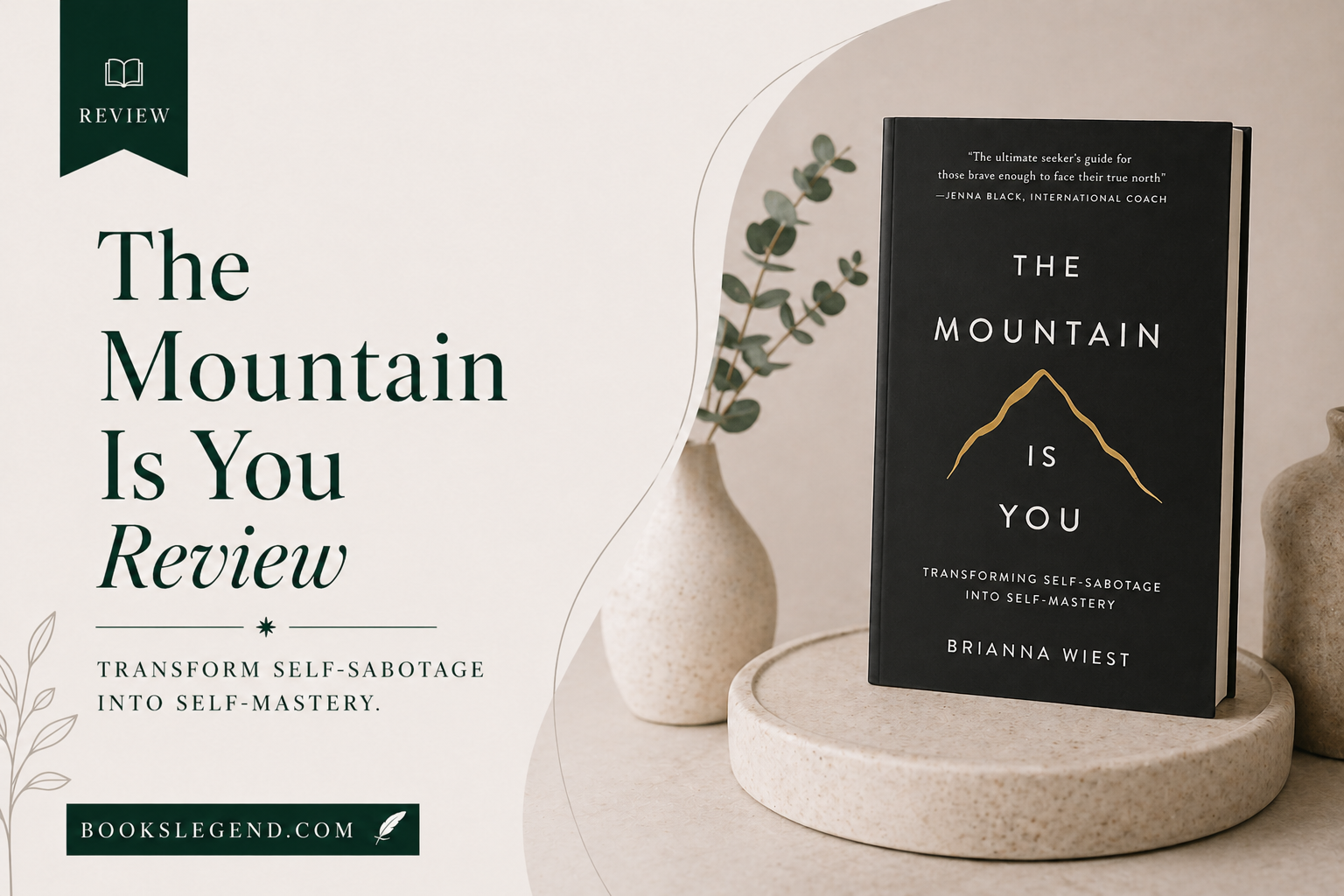
The Mountain Is You Review: A Book That Changes How You See Yourself
The Mountain Is You review is one of the most searched phrases among readers looking for self-help books that actually hit differently. And honestly? This book earns the attention. Written by Brianna Wiest and published in 2020, it’s a short read with a big punch. If you’ve ever felt stuck, self-sabotaged a good thing, or wondered why you keep repeating the same patterns, this book speaks directly to you.
What Is The Mountain Is You About?
The book uses a simple but powerful idea. The mountain you’re trying to climb? You built it yourself. Brianna Wiest argues that the obstacles blocking your life are often things you’ve unconsciously created. They’re defense mechanisms, fear responses, and old habits your mind put in place to protect you. The book is about learning to recognize them and finally tear them down.

This isn’t a book that tells you to think positive and hustle harder. It goes deeper than that.
Wiest looks at why people self-sabotage, and more importantly, how they can stop. She pulls in ideas from psychology, mindfulness, and emotional intelligence to explain why we sometimes work against our own happiness.
Who Is Brianna Wiest?
Brianna Wiest is a bestselling author and writer who has built a massive following through her honest, reflective writing style. She’s also the author of 101 Essays That Will Change the Way You Think and I Am the Hero of My Own Life.
Her writing resonates because it doesn’t preach. She writes like someone who’s been through it herself. You can find more about her work on her official Goodreads author page.
The Mountain Is You Review: What Works
Let’s get into the heart of this The Mountain Is You review. The book does several things really well.
The Writing Is Clear and Honest
Wiest doesn’t write like a therapist giving a lecture. She writes like a friend who’s read all the therapy books and figured out how to translate them into everyday language. Her sentences are clean. Her ideas are direct. You won’t find dense jargon here.
Some chapters are only a few pages long. That’s intentional. She gives you one idea, explains it clearly, and moves on. It respects your time and your intelligence.
It Explains the “Why” Behind Self-Sabotage
This is where the book really shines. Most self-help books tell you what to change. This one tells you why you haven’t changed yet. That difference matters more than people realize.
Wiest explains that self-sabotage is almost always a fear response. Your brain doesn’t like change, even good change. So when you start moving toward something better, it pulls you back. Not because you’re broken. Because your brain is trying to keep you safe using the only map it knows.
Once you understand that, the self-blame starts to loosen. And that’s where real change begins.
The Emotional Needs Framework
One section that stands out in this The Mountain Is You review is the chapter on emotional needs. Wiest breaks down how most of our negative behaviors are attempts to meet a real emotional need in a destructive way.
Procrastinating because you’re scared of failure. Pushing people away because you fear abandonment. Staying in the wrong job because change feels more dangerous than staying stuck.
She doesn’t shame you for any of it. She just helps you see it clearly.
It’s Written for Real People
Some self-help books feel like they were written for people who already have their life together. This one doesn’t. It talks about grief, failed relationships, anxiety, and the quiet shame that comes from feeling like you should be further along by now.
That honesty makes it easier to absorb. You feel seen, not lectured.

The Core Ideas in the Book
Here are the main themes Wiest builds the book around:
Self-sabotage as a coping mechanism. The book explains that most self-defeating behavior started as a survival strategy. The goal isn’t to fight it but to understand where it came from and find healthier ways to meet those same needs.
The role of the subconscious. A lot of what drives our behavior happens below the surface. Wiest asks you to get curious about your patterns instead of frustrated by them.
Emotional intelligence over willpower. Willpower runs out. Understanding your emotions doesn’t. The book pushes you toward building self-awareness rather than white-knuckling your way through change.
Identity and change. One of the quieter but more powerful points in the book is that change requires you to let go of an old version of yourself. That’s harder than most people admit, and Wiest gives it the space it deserves.
A Few Things to Keep in Mind
No book is perfect, and a good The Mountain Is You review should be honest about where it falls short.
It Can Feel Repetitive
The book is about 225 pages and covers a limited number of core ideas. If you’re a fast reader or someone who’s done a lot of therapy or personal development work, you might find yourself nodding along without being surprised. Some sections circle back to the same points in slightly different ways.
That’s not necessarily a flaw. Repetition can reinforce ideas that are hard to absorb. But it’s worth knowing going in.
It’s Not a Substitute for Therapy
Wiest’s writing is insightful, but it’s still a book. If you’re dealing with trauma, depression, or serious mental health challenges, reading this alone won’t be enough. It’s a great complement to professional support, not a replacement.
Some Readers Want More Practical Steps
The book leans toward reflection and understanding rather than giving you a step-by-step action plan. If you prefer workbooks or structured exercises, you might want to pair this with something more hands-on.
Who Should Read This Book?
This book is a great fit for you if:
You keep repeating patterns you don’t understand. You’ve started things you never finished, not because of laziness, but because something always seems to go wrong right when things start going well. You want to understand yourself better, not just be told to try harder.
It’s also a good read for people who are in a transition period. Starting over, rebuilding after a loss, or trying to figure out what they actually want. The book helps you see how your own habits and beliefs might be holding you back more than your circumstances are.
It’s probably not the best first self-help book if you’re brand new to the genre. Starting with something slightly more structured might give you a better foundation.
Final Verdict
To wrap up this The Mountain Is You review: it’s one of the better self-help books of the past few years. Not because it says something entirely new, but because of how clearly and honestly it says it.

Wiest has a gift for naming things that are hard to name. The way she explains self-sabotage makes you feel understood rather than judged. And that shift alone can be worth the read.
It won’t fix your life. No book can. But it might help you see yourself more clearly. And sometimes that’s the thing that changes everything.
If you’re looking for your next read after this one, check out our list of books similar to The Mountain Is You for more titles that explore self-awareness, emotional growth, and healing. You might also enjoy our review of Brianna Wiest’s other books if her writing style connects with you.
Rating: 4.5 out of 5 stars
Tags: